TAG-195 Expands Malware Capabilities with Modular Architectures
New Developments in TAG-195 Malware Families
Insikt Group's ongoing surveillance of the TAG-195 malware-as-a-service (MaaS) ecosystem has uncovered four new malware families: TinyEgg, ChonkyChicken, a modular variant of ChonkyChicken, and ChromEggscalator. The emergence of these new families illustrates a significant architectural shift within TAG-195, which has established a reputation for targeting financial gains through elaborate malware deployment strategies. As the cyber threat landscape evolves, organizations must remain vigilant, not just to the malware itself, but to the models of operation that drive these malicious campaigns.
Functionality and Architecture
TinyEgg operates as a lightweight initial-access backdoor that provides a range of capabilities including host profiling, interactive shell access, and persistence management. These features enable attackers to maintain control over compromised systems and gather intelligence on their environment. ChonkyChicken ups the ante by adding browser credential theft, session automation, and remote execution abilities, showcasing a clear evolution in sophistication. Interestingly, the modular iteration of ChonkyChicken introduces a controller-and-plugin architecture. This design allows a base implant to dynamically fetch specific modules, offering tailored functionalities on-the-fly. Such flexibility is particularly concerning, as it not only enhances operational efficiency but minimizes detection risks—a common goal in the cyber attack lifecycle.
In terms of architecture, ChromEggscalator is noteworthy. Originally crafted to circumvent Chrome's encryption, it has been repurposed as a useful module within the TAG-195 framework. This repurposing reflects a broader theme in the malware ecosystem: the constant adaptation of tools to meet operational demands. The consistent features across these families—like a unified command-and-control infrastructure and shared persistence techniques—indicates a deliberate strategy to streamline operations while enhancing the subterfuge of these tools. Just think about it: a unified approach to malware development could mean that once one family is detected, the others could still persist unchallenged.
Implications for Security Practices
The transition to a modular architecture signifies a calculated shift, likely prompted by the increasing scrutiny that such systems face from security professionals. This strategic pivot aims to lessen the static visibility of the base implant within security mechanisms. The move likely reflects the commercial dynamics inherent in the MaaS ecosystem, where operators might selectively provision capabilities to their customers, thus limiting exposure risks if their setup becomes compromised. For those working in cybersecurity, this means a fundamental change in defensive measures may be necessary. Identifying specific threats will require a keen focus on unexplained ClickFix-style clipboard execution chains, the exploitation of legitimate system utilities for malware deployment, and any anomalous communication patterns directed towards attacker-controlled external infrastructure.
Background on TAG-195
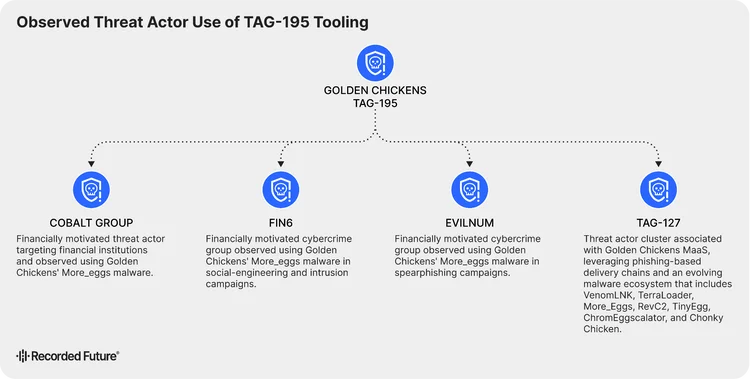
Also referred to as “Golden Chickens” or "Venom Spider", TAG-195 has carved out a reputation as a financially motivated MaaS provider. They offer tools for credential theft and remote access to a host of criminal organizations. This community is particularly vibrant, with individuals and groups often engaging in bidding wars for services tailored to commit various cybercrimes. The reliable delivery of malware across assorted threat actors signals the strength of TAG-195's operational structure, but details on their pricing models and sales logistics remain murky. As observed by Insikt Group, the tools linked to TAG-195 have been tied to notorious crime syndicates like FIN6, Cobalt Group, and Evilnum. This connection not only reinforces TAG-195's standing within the cybercrime hierarchy but also raises the stakes for organizations targeted by these sophisticated operations.
Future Outlook
What's particularly alarming is how TAG-195's evolution indicates broader trends in cybercrime. The advancements in their malware families signal an ongoing arms race between attackers and cybersecurity professionals. As adversaries refine their tools, defenders must continuously adapt their strategies and technologies. If you’re in this field, you can expect to see more sophisticated modular malware emerge. Organizations will have to invest in training and technology that can catch these dynamic threats, without becoming overly reliant on a static set of defensive mechanisms. The nature of security will likely shift from reactive to proactive, demanding constant vigilance and an evolving understanding of how these threats operate.
So, these developments are more significant than they may seem at first glance. The implications for security practices and the operational tactics that cybercriminals employ are becoming increasingly complex, making it essential for organizations to review their own defenses regularly. The TAG-195 malware families represent just the tip of the iceberg in a rapidly transforming cyber threat environment.


