Seagate's Path to 50TB HDDs: Meeting Rising Demand with Advanced Storage Solutions
Seagate is gearing up to qualify its next-generation hard disk drives with a remarkable 50TB capacity by late 2027. This announcement comes as the demand for hard drives surges, catalyzed by the expansion of artificial intelligence and the cloud computing market. The overwhelming interest has led to a situation where most of Seagate’s current offerings are booked through 2028, with discussions already ongoing for allocations extending into 2029. In a sector where data storage needs are increasingly critical, this move signals both confidence in growth and a strategic response to a booming market.
Mozaic 5 Platform: Driving Higher Capacities
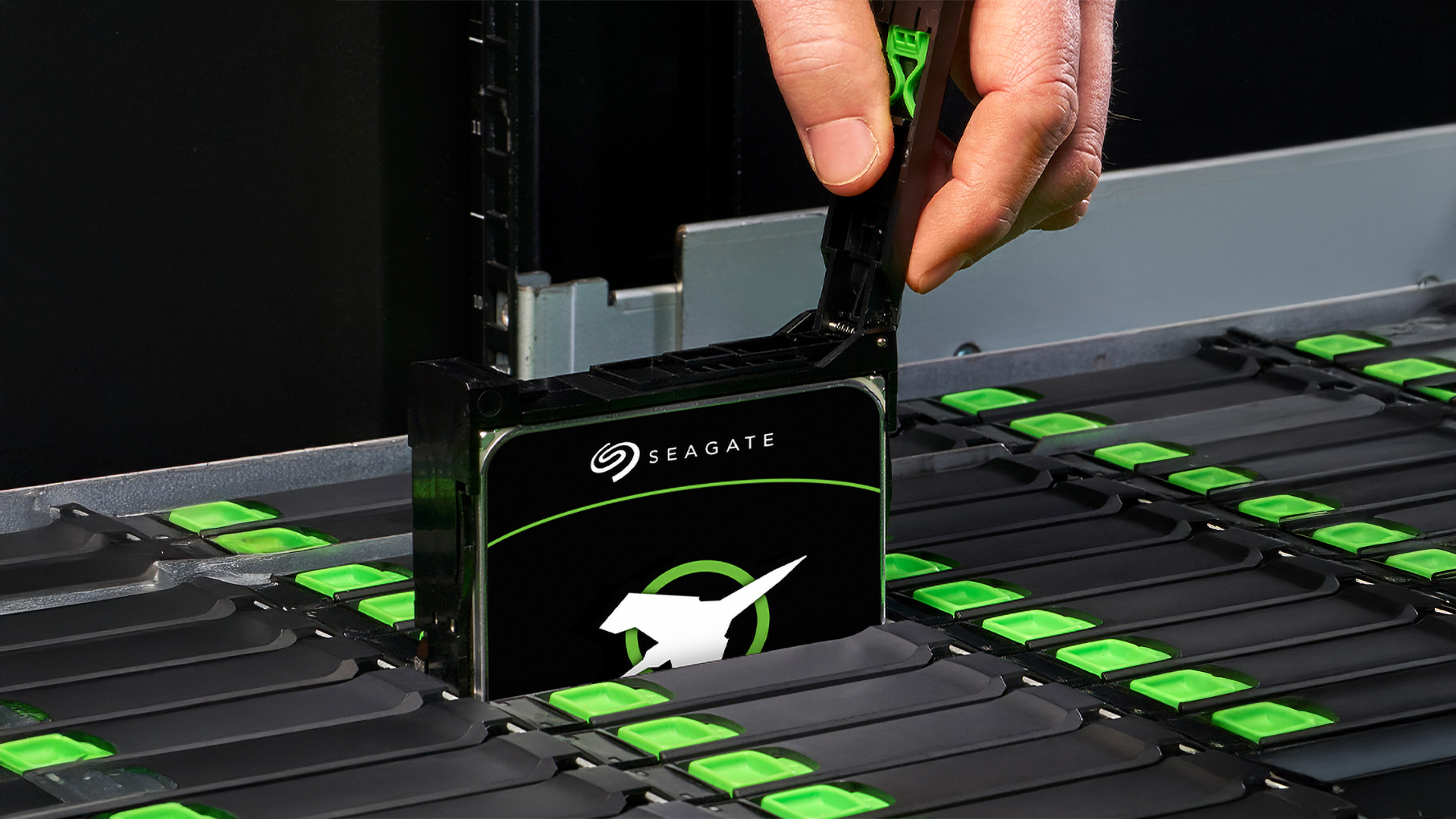
At the heart of this advancement is Seagate's Mozaic 5 platform, which, according to CEO Dave Mosley, maintains its schedule for qualification shipments in late 2027. This third-generation platform leverages heat-assisted magnetic recording (HAMR) technology, enhancing storage efficiency significantly. By utilizing platters exceeding 5TB, Seagate aims to construct HDDs with a total capacity surpassing 50TB. Clients can choose between conventional magnetic recording (CMR) for optimized performance or shingled magnetic recording (SMR) for superior storage density.
HAMR is not just a technical curiosity; it represents a fundamental shift in hard drive architecture. This technology allows for greater data density on each platter, thus permitting larger overall drive capacities. For organizations grappling with ever-increasing data storage demands—thanks to the likes of AI training datasets and massive cloud storage needs—this advancement cannot be understated. Seagate’s ability to offer a choice between recording methods means it can cater to a wide array of use cases, from high-performance applications to those that prioritize storage efficiency.
Timelines and Validation Process
Seagate’s timeline for rolling out these 50TB drives outlines a rigorous qualification phase. Once the drives are ready, they will undergo comprehensive internal reliability tests, including evaluations of media durability and resilience against shocks. Typically, original equipment manufacturers (OEMs) may need two to six months to validate these drives, while hyperscale data centers often extend this timeframe to six to twelve months. Consequently, significant shipments of the 50TB HDDs are projected in 2028, with a substantial volume increase expected in 2029.
This validation process can seem tedious, but it’s vital for ensuring that any product hitting the market meets the rigorous standards expected in today’s data centers. If you're working in this space, you know that reliability can make or break your operations. It’s more than just a few reliability tests; it translates into reduced downtime and seamless integration into existing infrastructures. The anticipation building among customers reflects their understanding of these implications, hinting at the profound impact these drives will have on their storage strategies.
Strategic Long-term Supply Agreements
These HDDs will arrive at a pivotal moment, coinciding with the escalating demand for exabytes of storage driven by AI initiatives and extensive cloud deployments. Most of Seagate’s nearline hard drives are already allocated under long-term supply agreements (LTAs) for 2028, with several customers eyeing contracts extending into the next year.
According to Mosley, the substantial majority of exabytes available today have been accounted for through these agreements, signifying strong long-term demand. "Our strategic relationships are deepening, and many partners are looking to extend their planning horizons through 2029 and beyond," Mosley remarked, showcasing their partners' faith in growing infrastructure needs. This suggests a fertile ground for future collaborations, but it also exposes a potentially concerning dependency on a handful of big clients, which can make Seagate’s fortunes unpredictable in the long run.
Pricing and Market Dynamics
The existing LTAs not only outline the exabytes to be delivered but also specify product configurations and pricing, locked in for the duration of 2027. For drives outside these agreements, Seagate has indicated a willingness to adapt pricing, hinting at potential increases in response to market dynamics, much like those seen with 3D NAND and SSD manufacturers.
Gianluca Romano, Seagate’s CFO, noted that production volumes saw a slight uptick in the fourth fiscal quarter, with expectations for a better output in the first quarter of the next fiscal year. "We are pricing that increased output at a very good price right now," he emphasized, indicating an agile approach to capitalize on the current demand wave. If this flexibility proves effective, it could cushion the company against any sudden market changes, especially as competition in storage solutions becomes fierce.
Future Outlook: Embracing HAMR Technology
The impressive capacity of Seagate’s drives, built on its Mozaic technologies, is primarily driven by HAMR. By early July, HAMR-based products accounted for about 40% of the company’s nearline HDD exabyte share, with projections up to 70% by mid-2027. Seagate is also on track to have half of its HAMR exabytes reliant on the Mozaic 4 technology by the end of 2026.
This acceleration in HAMR technology adoption doesn’t just represent a technical achievement; it speaks directly to market readiness and promotional strategies. As Seagate prepares for this significant product launch, its financial performance speaks volumes. For the fourth quarter of fiscal 2026, Seagate reported revenue of $3.629 billion, up from $2.444 billion year-over-year, alongside substantial net income growth and improving margins. Given these metrics, the company's strategy appears to be effectively balancing robust market demand with sustainable growth initiatives.
Implications of Seagate's Innovations
The anticipated roll-out of the 50TB hard drives is more significant than it looks on paper. Increased storage capacity is a fundamental need in industries as diverse as AI, big data analytics, and enterprise cloud services. It makes a direct impact on how organizations approach their data management strategies.
While Seagate's advancements will likely bolster its market position, one can't overlook the competition. Other players are also racing to enhance storage capacities and efficiencies. What this means for you is that we might see some price adjustments across the industry as companies respond to this heightened competition. It’s a cycle of rapid innovation, but it also poses risks, particularly if Seagate or others encounter delays or unforeseen technical issues.
Ultimately, the next few years could be pivotal for Seagate as it navigates both opportunities and challenges in a market undergoing profound transformation. The alignment of technology with demand will dictate not only Seagate's fortunes but also those of the broader storage industry.


