Reassessing Security: How Understanding Vulnerabilities Transformed a Healthcare Software Provider
A healthcare software provider, confident in the security of its segmented environment, invested heavily in layered defenses including strict access protocols and rigorous testing processes. However, a recent insider threat penetration test utilizing NodeZero® revealed vulnerabilities that could be exploited through a compromised developer credential, offering attackers a fast track to sensitive areas of the cloud infrastructure.
“It owned our network in a matter of minutes,” remarked the company's IT operations leader, highlighting the shocking speed of the breach. The provider recognized that ensuring security for a healthcare organization involves more than just safeguarding endpoints and servers. Any breach could have cascading effects on their customers and critical healthcare operations.
This alarming revelation prompted the organization to move beyond annual penetration tests and conventional vulnerability scanning to a model focused on continuous validation and proactive exposure management.
Key Outcomes of Enhanced Security Measures
- Eliminated 16 significant internal vulnerabilities that compromised four hosts, ultimately averting an AWS breach and the risk of sensitive data exposure.
- Reduced AWS exposure to just two low-severity weaknesses that could not be exploited together to cause a business impact.
- Removed excessive local-administrator access that NodeZero demonstrated could be exploited for rapid privilege escalation and lateral movement.
- Implemented structured privileged access approval workflows along with fortified multifactor authentication (MFA) measures.
- Established a consistent monthly schedule for testing, remediation, and validation efforts.
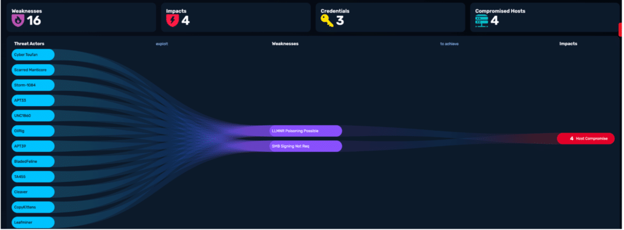
Image 1: Initial internal testing identified 16 weaknesses compromising 4 hosts which led to AWS compromise and sensitive data exposure.
Understanding the Impact of Vulnerabilities
The organization's security team initially believed their defenses were solid. The turning point came when they grasped the potential impact of a breach. Rather than simply cataloging vulnerabilities, they needed to understand how an attacker might chain weaknesses together in real scenarios.
Similar to other software providers, this company managed a widely distributed workforce, extensive developer access, hybrid infrastructures, and increasing reliance on cloud solutions. Prior to integrating NodeZero, their security strategy revolved around traditional assessments. However, the first run of NodeZero revealed how those assumptions could rapidly become outdated.
“An annual penetration test is merely a snapshot of security at a specific moment,” the IT operations leader explained. “Technology evolves; your defenses need to evolve with it.”
Initially, the team explored a phishing penetration test targeting their Microsoft 365 environment, but employees did not fall for the bait. Instead of assuming their team was immune from such threats, the organization redesigned the test by asking select employees—including a developer, an HR representative, and a support staff member—to purposely input their credentials. This exercise provided invaluable insights into how an attacker could exploit varying access levels.
The results depicted a stark reality. While the HR and support accounts were relatively insulated, the compromised developer credential opened numerous attack pathways. NodeZero broke through password protections and escalated privileges, moving laterally across segmented environments and targeting AWS-connected resources.
“We’re completely segmented,” the operations leader stated, reflecting on the false sense of security that segmentation provided. “We thought we were fine by being siloed. But NodeZero jumped the segments.”
The rapidity of the breach was surprising, but the most significant insight was recognizing that a single developer system with elevated access acted as a vulnerable pivot point, enabling extensive movement throughout their environment.
Consequently, the provider shifted focus from isolated vulnerabilities to managing exposure as a whole. They began to take seriously the reality that one compromised credential could lead to much larger issues down the line.
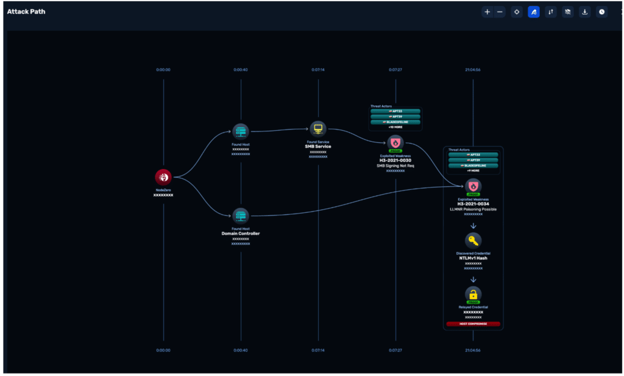
Image 2: NodeZero demonstrated how a compromised developer path could move laterally across segmented environments to obtain host compromise.
For a detailed discussion on their strategies for mitigation and remediation, click here.
Refocusing Security Priorities
“Ultimately, our goal is to make sure our staff has jobs to come to each day,” the IT operations leader concluded. This mindset reshaped their security philosophy from mere compliance to an ongoing commitment to validate that a real adversary cannot traverse their system undetected.


