Tracking the Threat of PurpleDelta: Unmasking North Korean Fraudulent Employment Tactics
Understanding PurpleDelta's Operations
Insikt Group's latest findings reveal a concerning trend surrounding PurpleDelta, a designation by Recorded Future for North Korean IT operatives. These individuals have taken a highly organized approach to infiltrate various industries, particularly within the technology and healthcare sectors. Notably, between late 2024 and early 2025, they applied to jobs at over 1,100 companies. This showcases a methodical strategy that leverages deception and sophisticated technology, raising alarms for employers who may unknowingly engage with these operatives.
The rise of cyber-espionage and hacking groups linked to state-sponsored entities is not new. However, the tactics employed by PurpleDelta represent a disturbing evolution in these strategies. The sheer scale of their operations speaks to the resources and planning behind them. Companies are often ill-prepared to confront such organized threats, particularly as these operatives potentially exploit loopholes in hiring processes.
The Mechanics Behind the Deception
PurpleDelta operators have established at least 22 fake personas specifically designed to interact convincingly with hiring managers. Their approach includes utilizing AI-generated profile images and engaging ChatGPT assistants to create realistic interactions. This is far from a casual job search; reports indicate an aggressive application rate of up to 60 jobs daily across multiple platforms. They employ a range of multi-account management tools to maintain their cover, adding layers of complexity that traditional HR practices may struggle to navigate.
The sophistication of their methods warrants close examination. During interviews, these operators record sessions using screen capture software, allowing them to analyze their performance later. The ease with which they can reference ChatGPT responses raises serious questions about the vetting processes of companies that fall prey to these tactics. Considering that many organizations have rushed to implement remote hiring practices, the potential for deception increases significantly.
Employers should recognize that, despite advancements in employment verification technology, these methods can still be circumvented if not actively monitored. Potential hires leveraging AI tools presents a new frontier that could undermine the integrity of hiring practices.
Post-Employment Activities
Once these operatives secure employment, their strategy doesn't stop there. Evidence suggests they engage in further deceptive practices, such as recording internal meetings and drafting pre-written excuses via Google Translate. This not only reveals the lengths they will go to maintain their ruse but also indicates a calculated effort to justify the use of personal devices and banking accounts under false pretenses. This is particularly troubling considering the sensitive data many firms handle daily.
Coordination of these activities through platforms like Telegram and Slack shows a level of organization that can easily outpace standard employer responses. It's common for such operatives to work with facilitators who assist in managing company-provided hardware, ensuring their digital footprint remains hidden. For companies, this is a wake-up call; it's not just about who gets through the hiring door but who’s on the other side once they’re in.
Wider Implications for Employers
Insikt Group's analysis warns that the techniques employed by PurpleDelta pose substantial threats to the organizations that hire these operatives. Furthermore, they highlight a broader risk associated with North Korean IT workers. Pragmatically, companies should observe patterns of application behavior characteristic of PurpleDelta’s activities closely. Those patterns can serve as telltale signs of potential compromise, prompting deeper investigations into the employment history and access levels of flagged individuals.
Employers who overlook these signs may end up jeopardizing not only their operational integrity but also their customers’ trust. As cyber insights become increasingly critical in this high-stakes hiring environment, companies must reassess how they vet candidates, especially when the roles involve sensitive information or systems. Ignoring these risks could lead to catastrophic financial and reputational loss.
Operational Overview
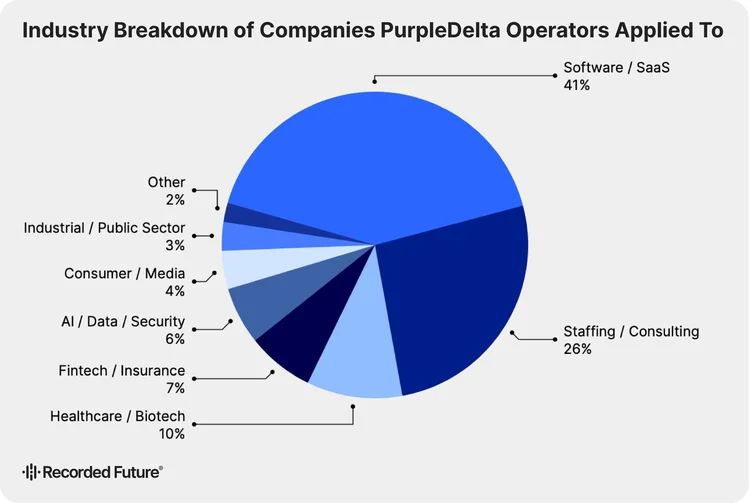
The breadth of PurpleDelta's operations spans various industries, with nearly 41% of application targets located within software and IT services. Approximately 26% were in staffing and consulting, while healthcare and biotechnology firms accounted for nearly 10% of their targets. This distribution indicates a comprehensive strategy aimed at sectors that handle vast amounts of data and often have less stringent security protocols in place due to their fast-paced operational requirements.
Most impacted companies are situated in North America, but the reach is far more global, signifying how widespread this issue has become. The ripple effects of successful infiltration can be devastating; a single compromised employee could give away access to proprietary technologies, sensitive customer information, or even operational strategies.
Implications for the Future
The tactics employed by PurpleDelta represent a broader shift in how cyber threats manifest in recruitment and employment. If you’re working in this space, it might be time to advocate for stricter vetting processes and a reevaluation of behavioral analytics. More than just a trend, this is a fundamental transformation in hiring security that demands immediate attention from HR departments and security professionals.
As remote work becomes entrenched, organizations need to prioritize the integration of technology solutions that can detect anomalies in applicant behavior. Companies can't afford to remain passive; they must proactively seek out new strategies to mitigate potential risks while fostering a transparent hiring process. Otherwise, they might find themselves as the next headline in an ongoing saga of corporate infiltration.
Conclusion and Recommendations
As we continue to monitor PurpleDelta’s intricate web of fraudulent employment tactics, the risk associated with these operations is material. Organizations must remain vigilant and strengthen their verification processes, especially when hiring for remote technical roles. Those familiar with the indicators outlined have the responsibility to assess their employment practices to mitigate the threat posed by these sophisticated operatives.
Employers should also establish a feedback loop, allowing employees to report unusual behaviors or discrepancies in team dynamics, and incorporate regular audits of their hiring practices. Implementing these strategies today might just save them from a larger issue tomorrow.


