Navigating the New Challenges of Vulnerability Management in an AI-Driven Landscape
As we examine the evolving role of AI in vulnerability management, it's evident that while the technology is enhancing research capabilities, it hasn't altered the core principles of managing vulnerabilities. In fact, it appears to be amplifying existing challenges such as patch prioritization and remediation delays.
Organizations face an increasingly pressing timeline to assess vulnerabilities that could be exploited. With the overall number of vulnerabilities on the rise, those relying on outdated practices or manual methods are left with heightened security risks. The uptick in reported vulnerabilities necessitates a swift re-evaluation of how organizations manage their risk exposure.
Understanding the Vulnerability Dynamics
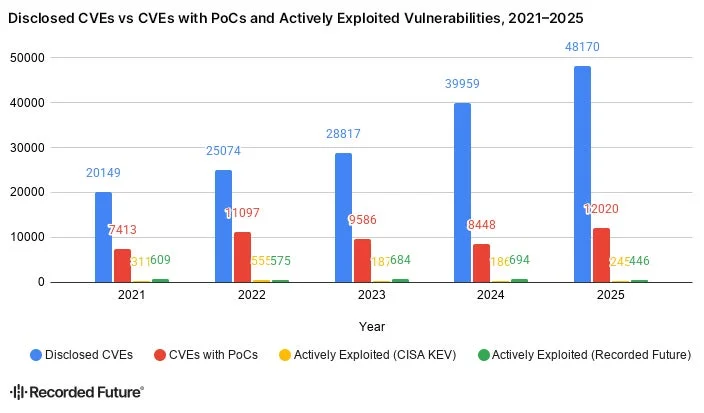
Vulnerabilities, the defects that attackers exploit, aren't all equal in threat potential. Many disclosed bugs are impractical for attackers to leverage due to complexity or limited access. However, the pace of disclosed vulnerabilities surged, with numbers jumping from around 21,000 in 2021 to almost 50,000 anticipated in 2025. This spike is partially a result of better disclosure practices and the increase in software development, which has expanded the attack surface.
Yet, only a small fraction of these vulnerabilities, as reported by Recorded Future, are actively exploited, emphasizing that attackers are selective. They typically target vulnerabilities that offer a feasible return on investment through their accessibility and impact potential. Vulnerabilities that meet these criteria can be exploited remarkably quickly—VulnCheck noted that nearly 29% of key exploited vulnerabilities in 2025 were targeted on or before their public announcement. This reflects an increasing trend towards faster exploit development.
AI's Impact on Vulnerability Management
The introduction of sophisticated AI models from companies like Anthropic and OpenAI has created waves in cybersecurity defense capabilities. Despite these advancements, AI in vulnerability discovery is not a new phenomenon; rather, its application has matured. Current AI tools still require skilled operators to fully exploit their potential, which demonstrates the importance of expertise in this rapidly changing field.
The effects of AI on vulnerability management manifest in three key areas:
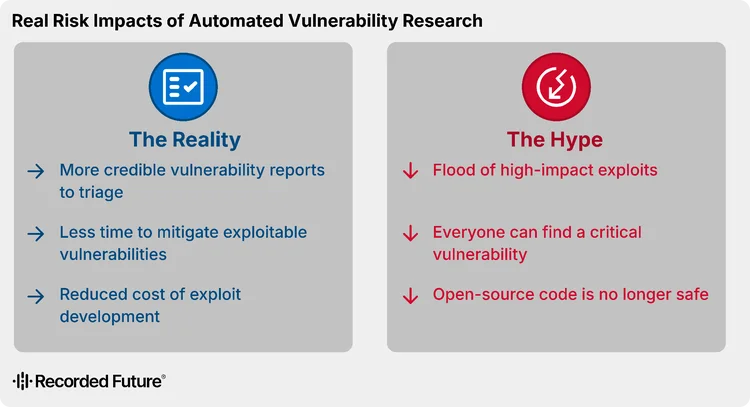
- Improved Triage of Vulnerability Reports: Advanced AI systems are now capable of evaluating code behavior and identifying the most significant vulnerabilities systematically.
- Accelerated Remediation Timelines: AI models are enhancing the speed of exploit development, compressing the timeframe from vulnerability disclosure to potential attack, potentially down to minutes.
- Lowered Exploit Development Costs: New AI capabilities assist in creating proof-of-concept exploitations more efficiently, hastening the development cycle for skilled attackers.
Surge in Vulnerability Disclosures: Managing the Noise
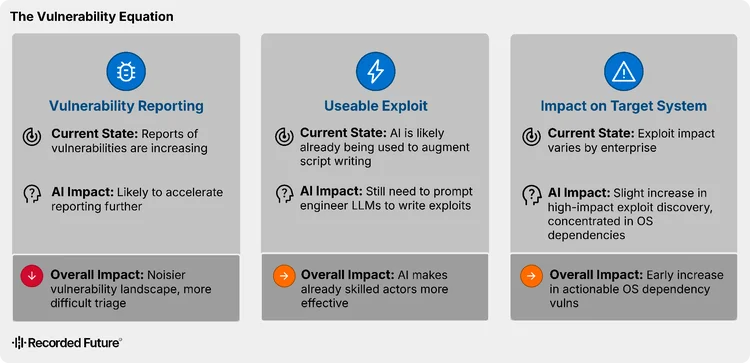
The deployment of AI in vulnerability scanning is poised to increase the volume of disclosed vulnerabilities significantly. Following a notable AI-driven announcement, Microsoft reported their second largest Patch Tuesday to date, although the company noted that this increase wasn't solely due to AI discoveries but rather on the broader context of vulnerability findings. The pressing question now is whether cybersecurity teams can manage this flood of reports effectively.
This deluge of vulnerabilities is straining researchers' capacity to assess risks accurately, resulting in a backlog for categorizing and responding to newly discovered issues. A sudden spike in plausible findings may overwhelm existing processes, pushing teams to discern which vulnerabilities could potentially lead to significant attacks.
Time Constraints for Effective Response
As the threat environment evolves, defenders are facing stringent timelines to act on identified vulnerabilities. The improved automation in developing exploits will compress the period from discovery to real-world application for the most critical vulnerabilities. This shift will force organizations to reassess not just high-severity vulnerabilities but also those considered medium-risk that could form part of larger exploit chains.
Signal Amidst Increasing Noise
While not every disclosed vulnerability will translate into an exploit, the prospect of a higher occurrence of impactful vulnerabilities complicates the triage process. Defenders are grappling with the increased volume of reports, raising the urgency to pinpoint high-severity issues before they can be weaponized by attackers. Organizations already struggling to keep pace may find themselves at a disadvantage as the threat landscape ramps up.
Leveraging Automation for Improved Defense
The immediate concern isn't solely the rise of new vulnerabilities but the diminishing window to identify and address the most pressing ones. It's essential for organizations to separate vulnerability detection from exposure management. Despite the increase in findings, it’s critical for teams to have contextual understanding to prioritize effectively.
To stay ahead, organizations should enhance their vulnerability discovery, prioritization, and remediation efforts. Here are five recommended actions:
1. Automate Vulnerability Prioritization and Remediation
Organizations should pivot from relying solely on CVSS scores to employing risk assessments based on real-time exploitability. Automate existing processes for scanning and threat hunting, focusing on high-traffic and externally facing systems to quickly address active threats. For instance, Recorded Future’s resources can offer insights into emerging vulnerability trends.
2. Expedite Patching Cycles
Given the rapid evolution of exploit timelines, patch management strategies must adapt. Faster patching is required, especially for systems that are regularly accessed or crucial to operational integrity. Automated solutions for remediation will be vital in keeping pace with the intensified discovery rates.
3. Minimize Legacy Software Dependencies
Legacy systems, particularly unsupported software, pose heightened risks as AI enhances attacker capabilities in identifying vulnerabilities. Firms should evaluate their reliance on such systems and consider isolating them or transitioning to more secure alternatives.
4. Integrate Early Detection in Development
By incorporating automated security testing and vulnerability detection earlier in the development lifecycle, organizations can remediate issues before they reach production, significantly lightening the load on security teams later.
5. Prepare for High-Impact Vulnerabilities
Establish contingency plans and playbooks for addressing widespread vulnerabilities, especially in cases where patches may not arrive immediately. Preparation should cover not only patch application but also containment strategies such as network segmentation and access control measures.


