AI Hiring Automation Exposes the Limits of Human Oversight
Hiring automation is exposing a weakness in the familiar “human in the loop” approach: when a process runs at machine speed, a person’s nominal presence may not provide meaningful oversight. A reviewer who sees only a queue of machine ranked applications, or has too little time to assess them, may be present in the workflow without being able to change its direction. The practical challenge is to let AI handle work at scale while keeping decisions within human intent and clear safety boundaries.
How hiring became an automation loop
Job applications and screening increasingly feed each other’s use of AI. Applicants can use generative tools to tailor submissions at high volume; employers respond with automated filters to handle the influx. Greenhouse CEO Daniel Chait has called the pattern a “doom loop.” Neither side needs to intend this outcome for the cycle to take hold. Each move can look sensible in isolation: applicants want to be seen, and recruiters need to manage a growing pile of submissions. The problem emerges when each side’s response makes the other side’s workload harder to manage.
The volume shift is substantial. One survey found that applicants per hire tripled from 2021 to 2024, while Greenhouse reported a 412% increase in applicants per job posting. Job seekers are also using AI to prepare applications for hundreds of roles, making it harder for recruiters to assess each submission carefully. That changes the meaning of a large applicant pool: more documents don’t necessarily provide more useful evidence about who can do the work. If the materials are easy to generate and closely resemble one another, recruiters may spend more time sorting submissions while learning less from them.
Employers have expanded automation in response. Ninety-one percent of HR departments report using AI in recruitment, and Greenhouse data indicates that human recruiter numbers have fallen by more than half. Some companies now use AI to conduct interviews, leaving candidates with little or no direct contact with a potential employer until late in the process. Automation can reduce the effort involved in handling routine steps, but it also moves more of the candidate experience behind systems that applicants can’t question or easily interpret. The process may be faster to administer while remaining opaque to the people being assessed.
More automation, limited gains
The efficiency case remains uncertain. Only one-third of recruiters said AI had shortened time to hire; a quarter said hiring had become slower. That gap matters because speed is often the main justification offered for automating screening and interviews. If a system increases the volume of material recruiters must review, or creates extra checks later in the process, the work may simply have moved rather than disappeared. The numbers here are underwhelming.
Some employers are extending probation periods, suggesting they may be less confident in their ability to identify unsuitable candidates before making an offer. That doesn’t establish why any particular employer changed its policy, but it points to a tension in the larger story: tools intended to improve selection are being adopted alongside signs that employers still want more time to judge whether a hire is right. A system can sort quickly and still leave the underlying decision uncertain.
Applicants, meanwhile, report frustration with encountering bots instead of people during hiring. Automated processes can also create openings for fraud: scammers and state-sponsored cybercriminals have used fraudulent candidates to pursue secrets or cryptocurrency. These cases show that hiring systems are part of an organization’s security boundary, as well as its recruiting workflow. A candidate who passes a process that relies heavily on automated signals may still pose a risk that those signals were not designed to catch.
Design around outcomes, not throughput
Hiring was especially exposed because employers had already adopted tools such as keyword-based résumé filters, and application materials tend to follow patterns that generative AI can reproduce convincingly. But the forces behind the loop extend beyond recruitment: people are rewarded for acting quickly at scale, while each side’s use of automation pushes the other to automate further. The cycle can become self reinforcing even when neither side is satisfied with the result. A faster filter invites more applications; a larger applicant pool strengthens the case for a faster filter.
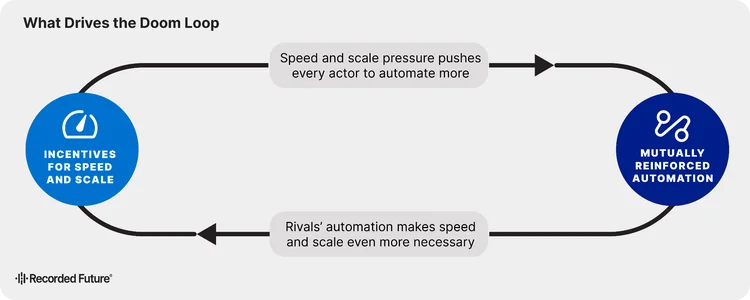
Figure 1: The anatomy of a doom loop (Source: Recorded Future)
For system designers, the lesson is to judge automation by the decisions and outcomes it produces, not by the volume it can process. When faster workflows shift incentives or make human review ineffective, adding more automation can deepen the problem. Effective oversight depends on deciding where machines can act independently and where a person must have time and authority to intervene. A human reviewer needs enough context to understand what the system has done, a realistic chance to challenge it, and actual authority to change the result. Otherwise, “human in the loop” can describe a workflow on paper without describing meaningful control in practice.
What the cycle means for future hiring
Here's the thing: the quality of a hiring system can’t be judged by throughput alone. Employers also need to ask whether the process identifies relevant candidates, gives recruiters enough room to exercise judgment, and leaves applicants with a credible way to engage with a person. Those questions are harder to reduce to a dashboard than counts of applications processed, but they speak more directly to whether the system is serving its purpose.
If you're working in this space, the practical test is where human attention enters the process and what it can still change. Review at the end of a fully automated chain may come too late to correct an early exclusion or a misleading assessment. (And this is the part most people overlook.) Oversight has to be designed around the decisions that carry consequences, with enough time and authority for people to act on what they see.
That said, the answer isn’t simply to remove automation from hiring. Large applicant pools create real administrative demands, and tools may help with parts of the work. The harder question is whether those tools improve the quality of decisions or merely make it possible to process more material. More applications handled. Less confidence in the outcome.


