Navigating the Complex Interplay Between Zero Trust and Autonomous AI Agents
The collision of zero trust security principles with autonomous AI agents poses significant risks for enterprises, raising accountability and visibility challenges.
H1 2026 revealed a rise in malware tactics using AI and familiar tools, along with an increase in exploited vulnerabilities, demanding stronger security measures.
Two severe vulnerabilities in SonicWall's Secure Mobile Access appliances are actively exploited, prompting urgent patching recommendations.
Anthropic's Enterprise Frontier Safeguards empower businesses to control data monitoring while detecting AI misuse, balancing compliance and security.
A serious authentication bypass in JFrog Artifactory has sparked real-world exploits, urging companies to act swiftly to secure their software supply chains.
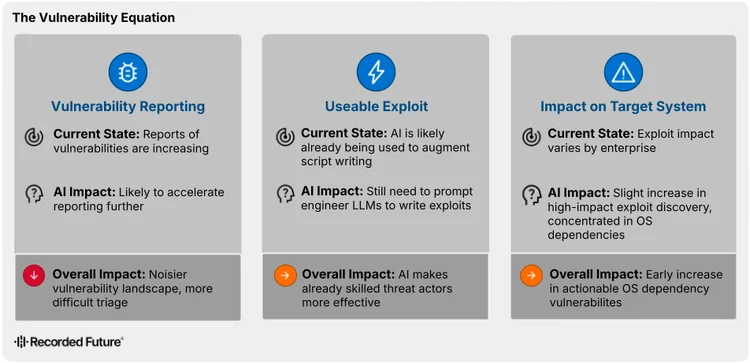
The influx of AI-discovered vulnerabilities demands a rethinking of patching strategies in operational technology to ensure safety and compliance.
Anthropic is revamping security practices in response to recent AI incidents, focusing on improving alignment, testing, and safety protocols.
Recent research reveals AI's emerging capabilities in vulnerability research for industrial control systems, though significant challenges remain.
OpenClaw's extensive update enhances usability and security across its platform, driven by over 933 contributors and aiming for improved system integrity.
A sophisticated attack campaign uses counterfeit CAPTCHA prompts, leading victims to execute harmful commands that compromise corporate networks.
ServiceNow has released urgent patches for three serious vulnerabilities in its AI Platform, emphasizing the need for timely updates and robust security measures.
Kubernetes 1.37 introduces substantial improvements in dynamic resource allocation and API validation processes, enhancing efficiency for AI and HPC workloads.
Researchers unveil GPUThor, a memory bit flipping technique that defeats ECC in Nvidia GPUs, raising concerns for enterprise security and AI workloads.
A structured approach to managing AI agent security incidents emphasizes proactive actions and rapid containment, rather than conventional responses.
The transition to Continuous Threat Exposure Management (CTEM) empowers security teams to address risk with agility and precision, streamlining vulnerability response.