Exploring Malware Trends and Vulnerability Exploitation in H1 2026
Executive Overview
The first half of 2026 has illustrated a disturbing trend: threat actors are increasingly exploiting familiar and legitimate tools within corporate and consumer environments rather than relying solely on technical innovations. The latest findings show that adversaries are leveraging exposed software, trusted platforms, and routine workflows. This means they are moving through these systems undetected while executing nefarious activities such as credential theft and lateral movement within networks. As a result, organizations are faced with a pressing need to improve their defenses, emphasizing exposure management, identity governance, and a multi-faceted approach to detecting unusual behaviors within their systems.
Key Findings
- The Insikt Group reported 215 actively exploited CVEs in H1 2026, reflecting a 34% increase compared to the same period in 2025. Notably, 142 of these vulnerabilities could be exploited without authentication, and an alarming 60 vulnerabilities allowed for remote code execution (RCE).
- Recorded Future reports confirmed the ongoing predominance of remote access trojans (RATs), with AsyncRAT maintaining its position as the leading malware family. Other notable RATs included Cobalt Strike and XWorm.
- AI-enabled malware activity has primarily supported existing tactics, enhancing rather than replacing traditional methods of attack.
- Ransomware techniques have become more sophisticated, utilizing familiar social engineering approaches and tools like PsExec for executing intrusions while limiting victims' recovery options.
- Mobile malware trends have shifted towards exploiting Android NFC capabilities, undermining payment security through malicious applications.
AI-Influenced Cyber Threats
AI's role in cyber threats has increased visibility during the first half of 2026, yet reports suggest these activities mainly serve to enhance pre-existing strategies rather than fully autonomously driving attacks. The introduction of new AI models has enabled an uptick in vulnerability reporting, with organizations leveraging these advancements to speed up threat validation and exploit analysis. However, this surge in vulnerability disclosures does not fundamentally alter the landscape; attackers must still recognize and weaponize weaknesses for exploitation.
Despite these advancements, AI's contribution raises concerns for defenders, who must now navigate a larger quantity of credible vulnerability reports that require in-depth analysis and swift action. They face the challenge of faster exploit development cycles, which compress remediation timelines and impact how threats are addressed. With the landscape changing, organizations are compelled to prioritize the vulnerabilities that pose the greatest risk and streamline their response processes.
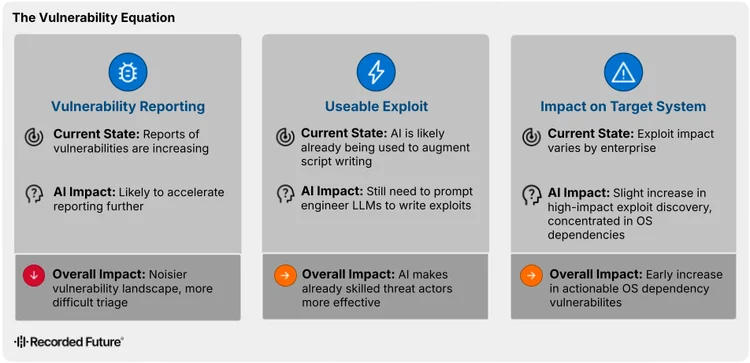
Malware reporting in early 2026 showcased an increased engagement with AI capabilities, representing a noteworthy shift from the previous year. Not examples include PromptSpy, identified by ESET as the first Android malware leveraging generative AI to improve its persistence. Threat actors are exploring AI tools to navigate complex systems and deliver malware more effectively. These developments highlight an era where adversaries are testing AI tools to efficiently tackle specific operational hurdles.
Vulnerability Exploitation Analysis
- The combination of network accessibility and minimal access requirements has exacerbated risk; a significant portion of vulnerabilities addressed in H1 2026 easily allowed exploitation without prior authentication.
- As defenders contend with newly discovered flaws, they also face patches from backlogged vulnerabilities, with some dating back several years.
- Threat actors are employing familiar post-exploitation tactics, linking various attack tools across multiple vulnerabilities to intensify their effectiveness.
Leading Vendors According to Exploited Vulnerabilities
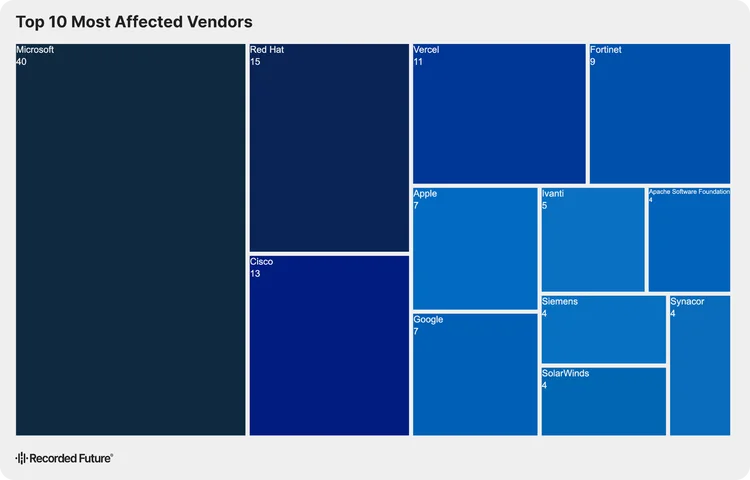
In H1 2026, Microsoft emerged as the vendor most frequently associated with exploited vulnerabilities, experiencing a 43% increase from the previous year. It had a total of 40 unique CVEs identified, overshadowing competitors like Red Hat, Cisco, and Vercel. Significantly, while Microsoft continues to dominate the reported vulnerabilities, exploitation trends have expanded into applications and frameworks outside its ecosystem.
Looking at exploited CVEs by product family, Windows-related products accounted for the majority, followed by Red Hat and various frameworks. This indicates that while major names receive attention, vulnerabilities across less commonly scrutinized products also represent a significant concern for defenders.
In summary, as the threat landscape evolves, organizations must remain vigilant and proactive in adjusting their security strategies, focusing on both AI-enabled threats and the complexities surrounding vulnerability management. The need to rapidly identify and remediate exploitable weaknesses is more critical than ever in maintaining resilience against these persistent threats.


