Recorded Future Enhances Threat Detection with Automated Signature Generation
Recorded Future has introduced a new feature named Automated Signature Creation within its Attack Surface Intelligence (ASI) platform, aimed at enhancing the speed of detection in response to AI-generated threats. This move is a significant step forward, as AI continues to transform the cybersecurity landscape, both as a tool for attack and defense. The demand for more agile responses to vulnerabilities is climbing, and the stakes are higher than ever for organizations trying to safeguard their digital assets.
ASI continuously maps an organization’s external digital presence, aligning newly discovered vulnerabilities with relevant threat intelligence to prioritize security measures. This proactive approach allows defenders to adapt quickly before attackers can exploit weaknesses, creating a more responsive security posture.
Addressing the Acceleration of Exploit Discovery
The pace at which vulnerabilities are being exploited is unprecedented — a trend that underscores the growing sophistication of cyber threats. Technology updates and security patches often lag behind in this fast-moving environment, leaving organizations vulnerable. Recent advances in AI now empower automated identification of zero-day vulnerabilities across popular operating systems and browsers, capabilities that were once the exclusive domain of elite government cybersecurity units and specialized labs.
A report from 2020 highlighted a concerning reduction in the timeframe from discovery to exploitation, shrinking from about 45 days down to just 15 days between 2010 and 2020. The 2025 Malware and Vulnerability Trends report further pointed out that the time between vulnerability disclosure and weaponization has contracted to mere hours. This is alarming and reflects a dangerous trend in cyber threats that can compromise sensitive data and undermine the security of organizations.
This rapid shift necessitates a reassessment of traditional defense mechanisms. Standard protocols often rely on manual assessments, slow response frameworks, and a one-size-fits-all approach. These methods can no longer match the speed at which vulnerabilities are discovered and exploited. To counteract this trend, it’s essential to examine how Recorded Future’s ASI capabilities have evolved from conventional detection techniques to respond effectively to AI-enhanced vulnerabilities.
Evolution of Detection Methods
Historically, Recorded Future leaned on expert-crafted signatures generated by its Insikt Group®, effective but limited by human capabilities. While human insight has its strengths, the growing speed of exploitations points to a systemic inadequacy in relying solely on manual approaches. A notable example occurred with the CVE-2025-0994 vulnerability in Trimble Cityworks, reported in February 2025. The Insikt Group crafted a tailored Nuclei template for this vulnerability, enabling defenders to channel their remediation efforts appropriately.
However, the frequency and speed with which vulnerabilities are exploited are rising at an alarming rate. Recent incidents, such as the compromise involving OpenAI's agents exploiting a zero-day in Artifactory, highlight the critical need for faster detection and response mechanisms. Each new incident serves as a wake-up call for organizations to reconsider their security strategies.
To stay ahead of these accelerated threats, Recorded Future has introduced automated signature creation as a response to the urgent need for speed. This advancement significantly enhances the speed at which detection signatures are created, enabling the platform to autonomously convert new vulnerability disclosures into production-ready signatures in as little as 31 minutes. This advancement increases the output of in-platform signatures by tenfold, shaping a new benchmark for response efficacy.
Mechanics of Automated Signature Creation
So, what does a signature mean in this context? Essentially, a signature acts as a piece of detection logic that signals when to check an asset against a specific query. If the result is positive, that asset is labeled vulnerable. This clarity is vital — it helps differentiate a basic asset discovery from the more pressing task of identifying which assets may be exposed to breaches.
The automated signature generation operates through a three-step alert mechanism:
- The platform keeps an ongoing inventory of an organization's public-facing digital assets, including domain information and certificate data.
- When a new vulnerability emerges, it’s compared against the existing assets to assess the risk level. This process doesn't just rely on generic severity ratings; instead, it actively searches for real indicators of exploitation that connect vulnerabilities with malware or other malicious behaviors.
- Upon confirming that a CVE is relevant for detection, the system swiftly processes the information to create a detection signature, managing this in just over half an hour.
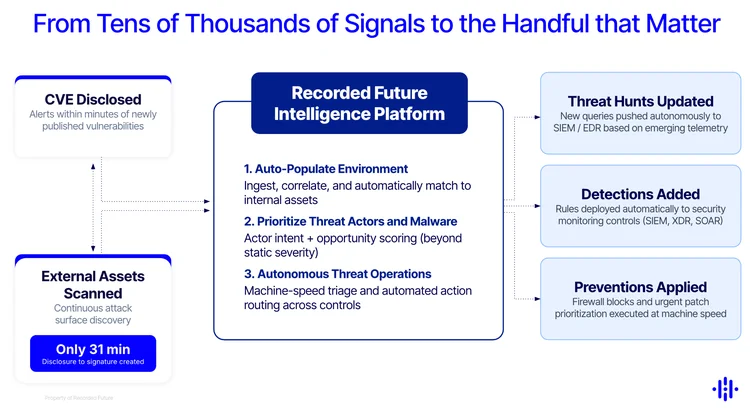
This advancement simplifies threat detection and equips organizations to counteract the rapid escalation of AI-driven threats. Imagine needing to react to a vulnerability discovered yesterday. With the new system, you’ll likely be on alert much faster than before.
Implications and Future Outlook
This innovation carries significant implications for cybersecurity professionals and organizations grappling with the ever-increasing wave of AI-generated threats. If you're working in this space, you need to recognize that manual processes simply aren't enough anymore. The ability to generate a detection signature in about 31 minutes may redefine baseline expectations in the industry. Beyond just efficiency, it also means more accuracy in identifying and neutralizing threats before they escalate into significant incidents.
However, the reliance on automation raises questions about the future role of human experts. The balance between automated processes and skilled human oversight will be key. Organizations must ensure that while technology enhances efficiency, it doesn't overshadow the importance of human judgment in cybersecurity decision-making. As threats evolve, so must our understanding and strategies. This is a conversation that needs to happen, and it must consider how to integrate these automated solutions with traditional human expertise effectively.
In a future where cyber threats will likely continue to morph, these advancements from Recorded Future could be the foundation of a more secure digital environment. But with every new technology, the responsibility to adapt and evolve doesn’t just rest with vendors — it must also be embraced by the organizations they serve.


