April 2026’s CVE Insights: Key Vulnerabilities and Exploit Trends
In April 2026, the Insikt Group® highlighted a concerning uptick in cybersecurity vulnerabilities, identifying 37 high-impact vulnerabilities requiring urgent remediation. This marks a 19% increase from March, with a staggering 35 of these vulnerabilities receiving a Very Critical Recorded Future Risk Score. Such escalations call for immediate attention from security teams across various industries, emphasizing the pressing need for vigilance in vulnerability management.
Magnitude of the Threat
A significant majority of these vulnerabilities—31 out of the 37—are cataloged in the US Cybersecurity and Infrastructure Security Agency’s (CISA) Known Exploited Vulnerabilities (KEV) list. This highlights the gravity of the situation: these vulnerabilities are not just theoretical risks but rather documented threats actively being exploited in the wild. Notably, six of the vulnerabilities emerged from honeypot data analysis and are exclusive to Recorded Future clients, indicating a growing understanding of threat actor behavior through real-world data collection.
The presence of such high and alarming numbers suggests that cybercriminals are successfully identifying targets with less resistance, leading to the possibility of large-scale breaches. When vulnerabilities are actively being exploited, the clock is ticking for security teams. They must prioritize immediate remediation efforts, particularly as attackers often take advantage of existing flaws to create footholds within organizations.
Vendor Exposure and Risks
These vulnerabilities span products from 23 different vendors, with Microsoft accounting for a notable 22% of the exposure. This concentration in a single vendor suggests a broader organizational risk, particularly among enterprise security and systems management tools, collaboration platforms, and network infrastructure solutions. The reliance on a limited number of vendors by organizations may exacerbate risk since a vulnerability in a popular product can have a cascading effect, impacting multiple businesses across various sectors.
The findings also implicate a systemic risk; when vulnerabilities cluster around major vendors, as seen here, it creates a predictable pattern for attackers. Organizations may need to reassess their strategies for vendor selection and product diversification to minimize their exposure to such incidents. After all, a compromise in one high-profile tool can lead to breaches that could disrupt multiple aspects of business continuity.
Vulnerability Analytics for April 2026
Below is a list of vulnerabilities that were exploited in April 2026, encouraging proactive security measures. Note that the table excludes the six CVEs linked to honeypots and includes highlights of public proof-of-concept (PoC) exploits identified by the Insikt Group®. Security teams should verify these PoCs for integrity before implementing them.
Score
✓
(available to Recorded Future Customers)
Table 1: Overview of vulnerabilities actively exploited in April 2026, sourced from Recorded Future data.
Emerging Exploit Trends
- Of the 37 vulnerabilities reported, seven were linked to ransomware operations, notably six tied to Storm-1175's Medusa ransomware. The trend indicates not just opportunistic hacking but sophisticated campaigns targeting specific high-value assets.
- Sixteen vulnerabilities enabled remote code execution (RCE), impacting products from major vendors including Microsoft, Adobe, and Fortinet. This trend reflects an alarming ease with which attackers can run malicious code on victim machines.
- The availability of public PoC exploits for 24 vulnerabilities highlights the ongoing risk of exploitation and underscores the need for urgent patching. With attackers often quick to adopt proven exploits, this creates an environment where security teams face constant pressure.
- Common vulnerabilities included those prone to Path Traversal and Code Injection, with some flaws persisting for over five years, demonstrating the continued exploitation of legacy issues. This persistence shows a systemic failure to remediate issues swiftly, highlighting the risks associated with outdated or neglected systems.
- With the fastest observed time from disclosure to exploitation being just two days, the urgency for rapid responses cannot be understated. Delays in patching can lead to catastrophic breaches that organizations may struggle to recover from.
Case Study: TBK DVR Vulnerability Exploited by Ransomware
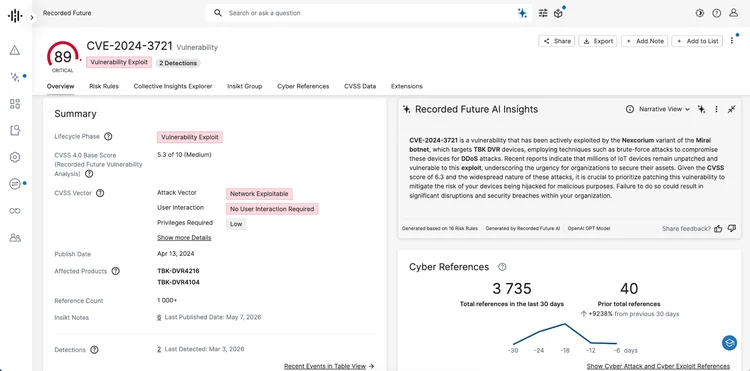
On April 17, 2026, FortiGuard Labs released an analysis revealing a campaign exploiting the TBK Digital Video Recorder (DVR) vulnerabilities, specifically CVE-2024-3721, to deploy the Nexcorium botnet, rooted in the notorious Mirai malware family. The exploitation takes advantage of an OS command injection flaw that permits remote execution of arbitrary commands. This specific example not only illustrates the risks posed by IoT devices but also demonstrates how interconnected systems can lead to large-scale disruption.
According to FortiGuard's findings, the attack initiates through specifically crafted requests targeting TBK DVR systems, enabling the attackers to load a downloader script. This exploitation demonstrates a tactical approach to hijacking vulnerable environments and indicates an alarming trend of targeting IoT devices, often an overlooked aspect of cybersecurity strategies. Many organizations focus on traditional IT systems while neglecting the security of IoT infrastructure, leaving them vulnerable to similar attacks.
For details on threat indicators and comprehensive analysis of this activity, Recorded Future clients can access in-depth reporting through the Insikt Group. This kind of targeted information is crucial in crafting effective defenses against emerging threats.
Future Outlook: What Lies Ahead?
As the cybersecurity realm shifts, staying informed about vulnerabilities and potential exploit paths is paramount for maintaining security. The present trends emphasize a need for organizations to adopt a proactive approach towards vulnerability management rather than a reactive one. This isn't just about patching; it's about understanding the threat environment, recognizing the implications of vendor risk concentration, and making strategic decisions that include security as a foundational element of technology planning.
If you're working in this space, the implications of these findings are clear. Staying up-to-date with emerging threats and trends will become even more critical in a landscape that shows no signs of slowing down. Investment in proactive measures, such as threat intelligence and timely patch management, must be part of the organizational culture. Otherwise, the risks continue to escalate, and that could sink an organization. The stakes aren't just high—they're rising.
And this is the part most people overlook. The tools and resources exist for organizations to bolster their defenses, but commitment and a strategic mindset will ultimately make the difference between a security breach and a secure environment.


