Transforming Cyber Defense: The Impact of AI and Threat Intelligence Fusion
Rethinking Cyber Defense with AI and Threat Intelligence
In the cybersecurity arena, it's essential to look beyond mere automation and acceleration of existing workflows. The true potential of artificial intelligence (AI) emerges when it intersects with threat intelligence—specifically, understanding attacker capabilities, tactics, techniques, and procedures (TTPs), alongside an organization’s own vulnerabilities. This strategic fusion not only enhances defensive capabilities but also begins to equalize the long-standing imbalance between attackers and defenders.
The Defender's Challenge: Asymmetry in Cybersecurity
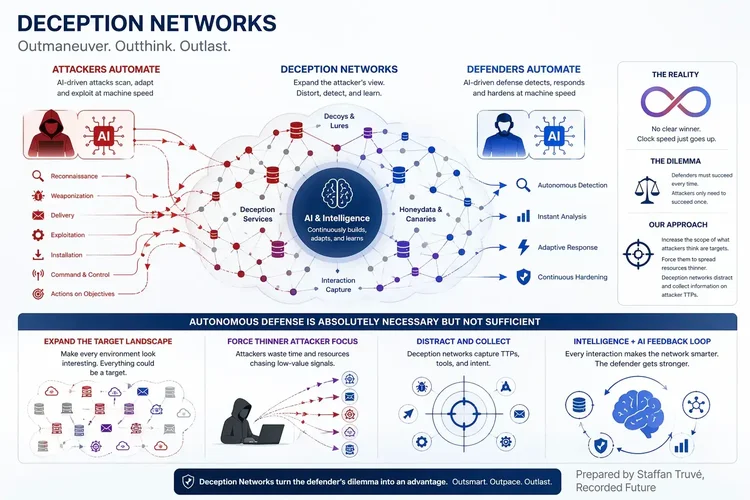
At the heart of cybersecurity lies an ongoing dilemma: defenders must shield every possible entry point, while attackers need to discover just one exploitable vulnerability. This disparity complicates defense efforts, particularly as defenders operate under constraints such as budgets and compliance regulations, whereas attackers can afford to be patient and selective.
Historically, threat intelligence has served as a reactive tool for defenders, primarily delivering indicators of compromise and malware signatures. Yet, such intelligence often lacks direct applicability to a defender’s specific environment, requiring significant human expertise to interpret and act on it. This leads to inefficiencies, as defenders struggle to utilize intelligence effectively given resource limitations.
Elevating Cyber Defense through AI: Automation and Beyond
A significant portion of AI's current benefit within cybersecurity focuses on automating traditional defense processes. Enhancements such as accelerated alert triage and automated threat intelligence integration have proven beneficial by reducing response times and mitigating the fatigue of security analysts. However, these advances merely optimize pre-existing workflows rather than altering the operational paradigm.
The New Era: AI and Threat Intelligence Convergence
The transformative power arises from the synergy between threat intelligence and AI reasoning. This convergence facilitates an integrated approach that enables AI systems to analyze attacker behaviors and assess defender exposures in real time, rapidly generating actionable insights that were previously unattainable.
1. Real-Time Exposure Mapping Against Threat Intelligence
A notable shift is the capacity for AI to continuously cross-reference threat intelligence reports with a live model of an organization’s infrastructure. This process enhances the relevance of threat intelligence by transforming it from a reactive alert system into a dynamic risk assessment tool tailored to each environment.
2. Integrating Offensive and Defensive Intelligence
Traditionally, organizations have maintained a separation between external threat knowledge and internal vulnerability data, often leading to fragmented understanding. AI bridges this gap by continuously integrating these aspects, thereby generating a comprehensive overview that is far more actionable than disjointed reports.
3. Prioritizing Threats Based on True Risk
Conventional patch management relies heavily on standardized severity scores, often neglecting contextual factors. AI models disrupt this pattern by analyzing real-world exploitation trends and internal vulnerability exposure, allowing for threat prioritization that aligns with actual risks rather than arbitrary metrics.
4. Advanced Contextual Reasoning
While traditional detection systems rely on strict event correlation, AI can synthesize complex data inputs, enhancing accuracy and relevance by interpreting anomalies in light of known threat behaviors. This improvement is not just about identifying anomalies but about discerning their significance within the context of known threats.
5. Dynamic Attack Path Assessment
Historically, penetration testing and exposure assessments were conducted periodically, leaving organizations vulnerable to evolving threats. AI's ability to maintain an up-to-date model of potential attack paths ensures that defenses are continuously refined against the latest strategies adopted by adversaries.
6. Anticipating Adversarial Actions in Real Time
During active incidents, responders often rely on intuition about an attacker’s likely next moves. AI models, however, can encode historical behavior patterns to predict subsequent actions during an attack, empowering teams to stay a step ahead rather than simply reacting to new developments.
AI-Enabled Deception: Turning the Tables
While the aforementioned capabilities primarily enhance defense, AI's application also expands into proactive deception strategies. This approach includes the use of dynamic decoys to mislead attackers, shifting the balance of power.
From Static to Adaptive Deception
Traditional deception methods, like honeypots, often fail due to their static nature and lack of realism. By harnessing AI, defenders can develop sophisticated deception tactics that adapt in real time, creating convincing environments that challenge the attacker’s efforts and tactics.
Precision Placement of Deceptive Assets
With access to detailed threat intelligence, AI can strategically position decoys along likely attack paths defined by actual attack patterns, enhancing the effectiveness of deception efforts and contributing to an informed defense strategy.
Increasing Costs for Attackers
By creating a robust deception infrastructure, defenders impose significant operational costs on attackers, forcing them to expend resources verifying the authenticity of their targets. This tactic shifts the traditional power dynamic, as attackers must now navigate an environment laden with traps.
Collecting Intelligence Through Engagement
AI also enables active engagement within deception scenarios, drawing out more information about adversary tools and strategies. This creates a feedback loop where deception tactics improve overall threat intelligence, refining future defensive measures.
Democratizing Threat Intelligence Access
A profound shift enabled by AI is the democratization of threat intelligence utilization. Analysts can pose simple queries and receive contextual answers, allowing organizations to harness intelligence-driven defense without relying solely on expert analysts.
Strategic Ramifications: Rethinking Defense Posture
AI transforms how organizations spend their resources by enabling continuous synthesis of offensive intelligence with internal vulnerability data, altering the traditional defender's dilemma. Rather than reactive, organizations can adopt a proactive stance to defend against the most likely threats based on real-time data analytics.
The essential asymmetry in cybersecurity is evolving; the focus is shifting from a binary attacker vs. defender framework to an “AI-augmented” versus “non-augmented” state. Organizations leveraging AI-enhanced threat intelligence are positioned to better mitigate the risks posed by increasingly sophisticated adversaries.
The Future of Cybersecurity: Challenges Ahead
As AI technologies develop, the potential for fully autonomous adversaries catalyzes the need for defenders to implement equally autonomous systems capable of real-time threat analysis and response. The intersection of AI, threat intelligence, and autonomous defense presents both promises and profound challenges that organizations must confront.
The relationship between intelligence and AI must evolve alongside adversarial tactics, urging defenders to develop systems that not only react to threats but also anticipate and adapt to them continuously.
The landscape remains complex; organizations must prepare for a future where cyber defense is both a proactive and reactive endeavor, balancing immediate responsibilities with long-term strategic initiatives.