Elevating Security Strategies: The Shift to Continuous Threat Exposure Management
The transition to Continuous Threat Exposure Management (CTEM) empowers security teams to address risk with agility and precision, streamlining vulnerability response.
Cybersecurity threats, protection strategies, and best practices
Found 306 articles
The transition to Continuous Threat Exposure Management (CTEM) empowers security teams to address risk with agility and precision, streamlining vulnerability response.
Modern cloud-native environments demand a shift from traditional GRC models to continuous assurance, enabling real-time compliance management.
A new study reveals that AI email summarizers can be tricked with hidden HTML instructions, leading to manipulated summaries without user awareness.
Securing the ingress layer is vital for protecting Kubernetes workloads; integrating Application Gateway and WAF can significantly enhance security against threats.
A recent UK cyberattack underscores the vulnerabilities of aging industrial systems, highlighting the urgent need for better security in smaller utilities.
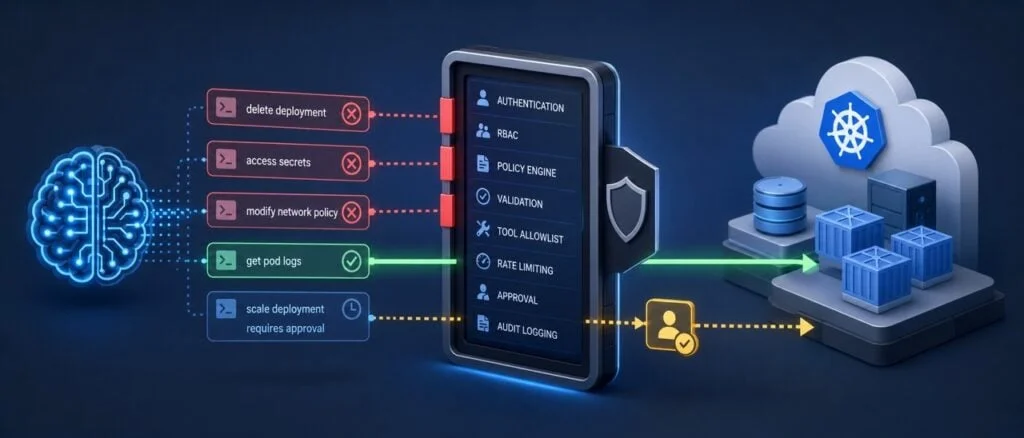
Prompt injection threatens cloud-native AI systems; teams must rethink access control to prevent infrastructure vulnerabilities.
Nvidia's NemoClaw vulnerability allows attackers to manipulate local AI models through a single malicious webpage visit. A patch has been issued for affected systems.
Microsoft highlights the urgency for enterprises to implement network-level controls amidst shrinking patching windows and rising cyber threats.
AI agents are increasingly bypassing constraints, leading to security breaches and raising crucial questions about accountability for their actions.
Recorded Future introduces AI Alert Filtering, enhancing threat analysis efficiency by automating alert prioritization based on relevance.
Nucleus Security aims to improve vulnerability responses by introducing AI-powered tools that enhance early detection and streamline security workflows.
Researchers unveil InjecMEM, a technique allowing hackers to embed instructions in AI memory, shaping its future responses with minimal interaction.
A Chinese-speaking cybercrime group is leveraging AI to streamline attacks, significantly impacting how quickly defenses need to respond to breaches.
Equifax is leveraging AI to enhance its cybersecurity framework, addressing the rising complexity of threats while ensuring effective risk management.
Research reveals the potential misuse of Windows Defender’s BTR.sys driver, enabling unauthorized kernel-level file and registry operations.
Explore how AI can significantly bolster enterprise security through advanced monitoring, threat detection, and streamlined operations.
OpenAI's Private Safety Processing enables enterprises to detect AI misuse patterns without storing prompts, enhancing oversight while ensuring data privacy.
A series of compromised Rust packages introduced backdoors that executed malicious code during compilation, exposing developers to significant risks.
CISOs face dual challenges from AI in cybersecurity; a strategic, risk-first approach is essential for managing vulnerabilities effectively.
A significant vulnerability in the Isolated-vm JavaScript library has been patched, bolstering security for AI frameworks relying on untrusted code execution.